
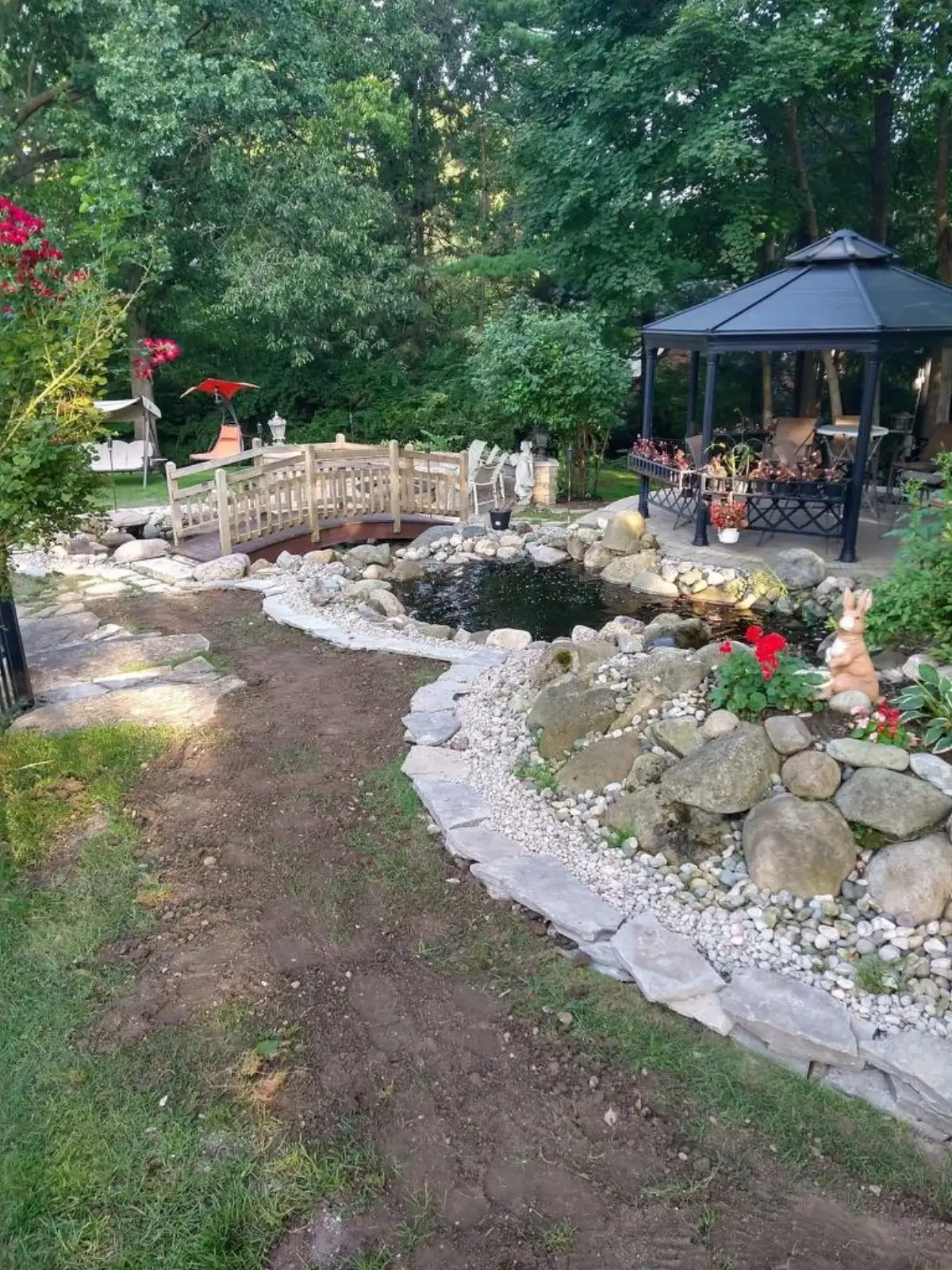
Summer Pond and Water Feature Care Guide for Michigan Homeowners
A backyard pond or waterfall is one of the most rewarding features you can add to a residential landscape. The sound of moving water, the sight of koi cruising through clear water, and the wildlife a pond attracts transform an ordinary yard into something you actually want to spend time in. But Michigan summers bring specific challenges that require attention: rising water temperatures, accelerated algae growth, increased evaporation, and heavier biological loads from fish and plant activity. The difference between a pond that stays beautiful through August and one that turns into a green, smelly mess is consistent summer maintenance.
This guide covers everything Metro Detroit homeowners need to know about keeping their ponds and water features healthy from May through September.
Understanding Summer Pond Biology
To maintain a pond effectively, it helps to understand what changes during summer. In spring, your pond transitions from cold dormancy to active biological cycling. By late May in Southeast Michigan, water temperatures reach the mid-60s, and the biological systems in your pond hit their stride. Beneficial bacteria colonies in your filter are fully active, breaking down ammonia and nitrites. Aquatic plants are growing rapidly, absorbing nutrients from the water. Fish are feeding actively and producing more waste.
This is a balanced system when everything works. The problems start when one element gets out of proportion. Too much fish waste with too few plants creates excess nutrients. Excess nutrients plus direct sunlight equals algae blooms. An undersized or poorly maintained filter cannot keep pace with the biological load. And rising summer temperatures reduce the water's ability to hold dissolved oxygen, stressing both fish and beneficial bacteria.
Algae Prevention and Control
Algae is the number one complaint among pond owners during Michigan summers, and it is almost always a nutrient management problem rather than a water treatment problem. There are two types you will encounter.
Green Water (Suspended Algae)
Green water is caused by billions of single-celled algae floating in the water column. Your pond looks like pea soup, and you cannot see the bottom even in shallow areas. Green water blooms are triggered by a combination of warm temperatures, direct sunlight, and dissolved nutrients (primarily phosphates and nitrates from fish waste, decaying organic matter, and fertilizer runoff).
The most effective long-term solution is shade and nutrient competition. Floating plants like water hyacinths and water lettuce provide surface coverage that blocks sunlight and absorbs the same nutrients algae need. A healthy pond should have 50 to 70 percent of its surface shaded by floating plants, lily pads, or marginal plantings by midsummer. A properly sized UV clarifier in the filtration system is the most reliable technological solution, killing suspended algae as water passes through.
String Algae (Filamentous Algae)
String algae grows in long, hair-like strands attached to rocks, liner surfaces, and waterfall faces. Some string algae is actually beneficial because it filters water and provides habitat for microorganisms that fish eat. The problem occurs when it grows so thick it clogs skimmers, restricts water flow over waterfalls, and smothers the surface of rocks.
Manual removal is the first line of defense. A toilet brush or algae brush twisted into the strands pulls it off rocks quickly. Barley straw placed in the pond or waterfall in early spring releases compounds as it decomposes that inhibit string algae growth without harming fish or plants. For persistent problems, beneficial bacteria treatments marketed specifically for string algae can help, but they work best as part of an overall nutrient management strategy rather than a standalone fix.
Pump and Filter Maintenance
Your pump and filter system is the circulatory system of your pond. During summer, when biological activity peaks, maintenance frequency increases.
Skimmer Basket
Empty the skimmer basket at least weekly during summer, more often during heavy pollen, cottonwood seed, or leaf-fall periods. A full skimmer basket restricts water flow to your pump, reducing circulation and filtration capacity. In Metro Detroit, cottonwood season in late May and early June can fill a skimmer basket daily.
Biological Filter
Check your biological filter media every 1 to 2 weeks. When you see flow reduction through the filter (water bypassing rather than flowing through the media), it is time to rinse. Always rinse filter media in pond water, not tap water. Municipal water contains chlorine or chloramine that kills the beneficial bacteria colonies your filter depends on. Squeeze or rinse the media until the water runs mostly clear, then replace it.
Pump Inspection
Inspect the pump intake screen for debris weekly. A partially blocked intake reduces flow rate and forces the pump motor to work harder, shortening its lifespan. If your waterfall or stream flow looks weaker than normal, a clogged pump intake is the first thing to check. Also check for any unusual vibrations or sounds from the pump, which can indicate bearing wear or impeller damage.
Fish Care During Michigan Summers
Koi and goldfish are cold-blooded, meaning their metabolism and activity level are directly controlled by water temperature. Summer brings peak feeding, peak waste production, and the greatest risk for oxygen stress. Fish that were barely moving in March are now active, hungry, and growing rapidly.
Feeding
Feed fish only what they can consume in 5 minutes, once or twice daily. Uneaten food sinks to the bottom and decomposes, adding nutrients that fuel algae growth and producing ammonia that stresses fish. In peak summer heat (water temperatures above 80 degrees), consider reducing feeding frequency because high temperatures stress fish digestive systems. When water temperatures drop below 50 degrees in fall, stop feeding entirely as fish metabolism slows to the point where they cannot digest food.
Oxygen Levels
Warm water holds less dissolved oxygen than cold water. At 80 degrees, water holds roughly 40 percent less oxygen than at 50 degrees. On hot, still days in July and August, dissolved oxygen can drop to levels that stress fish, especially in heavily stocked ponds. Signs of oxygen stress include fish gasping at the surface, congregating near the waterfall (where oxygen levels are highest), and lethargy.
Running your waterfall and any additional aeration (air pumps, bubblers) 24 hours a day during summer is the most important thing you can do for fish health. Turning off the waterfall at night to save electricity is the single most common mistake that leads to overnight fish die-offs during hot spells. The waterfall is not just decoration. It is your primary oxygenation system.
Water Level Management
Michigan summers can evaporate 1 to 2 inches of pond water per week, and waterfalls accelerate the loss because water exposed to air while flowing over rocks evaporates faster than still water. A pond that loses an inch of depth per week will drop its level significantly by August if not topped off regularly.
Top off your pond with a garden hose as needed, but follow these guidelines. Add water slowly rather than in one large blast. Use a dechlorinator if your municipal water supply uses chlorine or chloramine. Never add more than 10 percent of the total pond volume at once, as large temperature and chemistry swings can shock fish. An auto-fill valve connected to your water supply automates this process and maintains a consistent level.
Summer Plant Care
Aquatic plants are your pond's natural filtration system and your best weapon against algae. They absorb the nitrogen and phosphorus compounds that algae need, shade the water surface to reduce temperature and block sunlight, and provide cover for fish.
Fertilize potted water lilies and lotus monthly during the growing season with aquatic plant fertilizer tabs pushed into the soil. Do not use standard garden fertilizer, which dissolves into the water and feeds algae instead of plants. Deadhead spent lily blooms and yellowing leaves regularly to prevent decaying plant material from adding nutrients back into the water.
Divide and thin aquatic plants that outgrow their containers. An overcrowded lily pot produces fewer blooms and can become root-bound. Most water lilies benefit from division every 2 to 3 years. Marginal plants like iris, cattails, and pickerel weed should be thinned when they fill more than two-thirds of their planting area.
Protecting Your Pond from Predators
Herons, raccoons, and the occasional neighborhood cat are drawn to backyard ponds during summer when fish are active and visible. Great blue herons are the primary predator concern in Metro Detroit. They are patient, persistent, and capable of emptying a small pond of fish in a single visit.
The most effective deterrent is pond design. Steep sides (rather than gradual beaches), fish caves or shelves built into the pond, and floating plant coverage give fish hiding places. A heron decoy works for a few days until real herons figure out it is fake. Motion-activated sprinklers (sold as deer deterrents) provide a more reliable automated defense. Fishing line strung 18 inches above the water surface in a grid pattern makes landing difficult for herons without affecting the pond's appearance from normal viewing angles.
When to Call for Professional Help
Routine summer maintenance is straightforward for most pond owners. However, certain situations require professional expertise and equipment.
- Persistent water quality problems that do not respond to standard treatments may indicate an undersized filter, a liner leak, or groundwater infiltration
- Pump or plumbing failures during the growing season need quick resolution to prevent fish loss and biological filter die-off
- Major algae blooms that resist nutrient management may require a comprehensive system evaluation
- Adding or upgrading features like waterfalls, streams, or filtration upgrades during the growing season
- Fish health issues like visible parasites, ulcers, or unexplained deaths
Our team has been building and maintaining ponds and water features across Warren, Sterling Heights, Troy, Rochester Hills, and Metro Detroit for over 20 years. Whether you need a spring startup, a midsummer tune-up, or a complete water feature design, we handle every phase of the project.
Frequently Asked Questions
How often should I clean my pond filter in summer?
Check your biological filter every 1 to 2 weeks during summer. Rinse filter media in pond water (never tap water, which kills beneficial bacteria). Mechanical pre-filters and skimmer baskets should be emptied weekly or more often during heavy debris periods.
Why is my pond water green in summer?
Green water is caused by single-celled algae that thrive in warm, nutrient-rich water with direct sunlight. The three most effective solutions are adding aquatic plants to shade the surface and absorb nutrients, ensuring your biological filter is properly sized and maintained, and reducing fish feeding to limit nutrient input.
How do I keep my pond water level up during Michigan heat waves?
Evaporation can drop pond levels by 1 to 2 inches per week during hot Michigan summers. Top off with a garden hose, but add water slowly and use a dechlorinator if your water supply is treated with chlorine or chloramine. Never add more than 10 percent of the total pond volume at once to avoid shocking fish with temperature or chemistry changes.
Keep Your Water Feature Beautiful All Summer
A well-maintained pond rewards you every day from May through September. Consistent attention to filtration, nutrients, and fish health prevents the problems that turn pond ownership from a pleasure into a chore. If your pond needs professional attention this summer, or if you have been thinking about adding a water feature to your property, contact us to schedule a visit or call (248) 837-5090.