
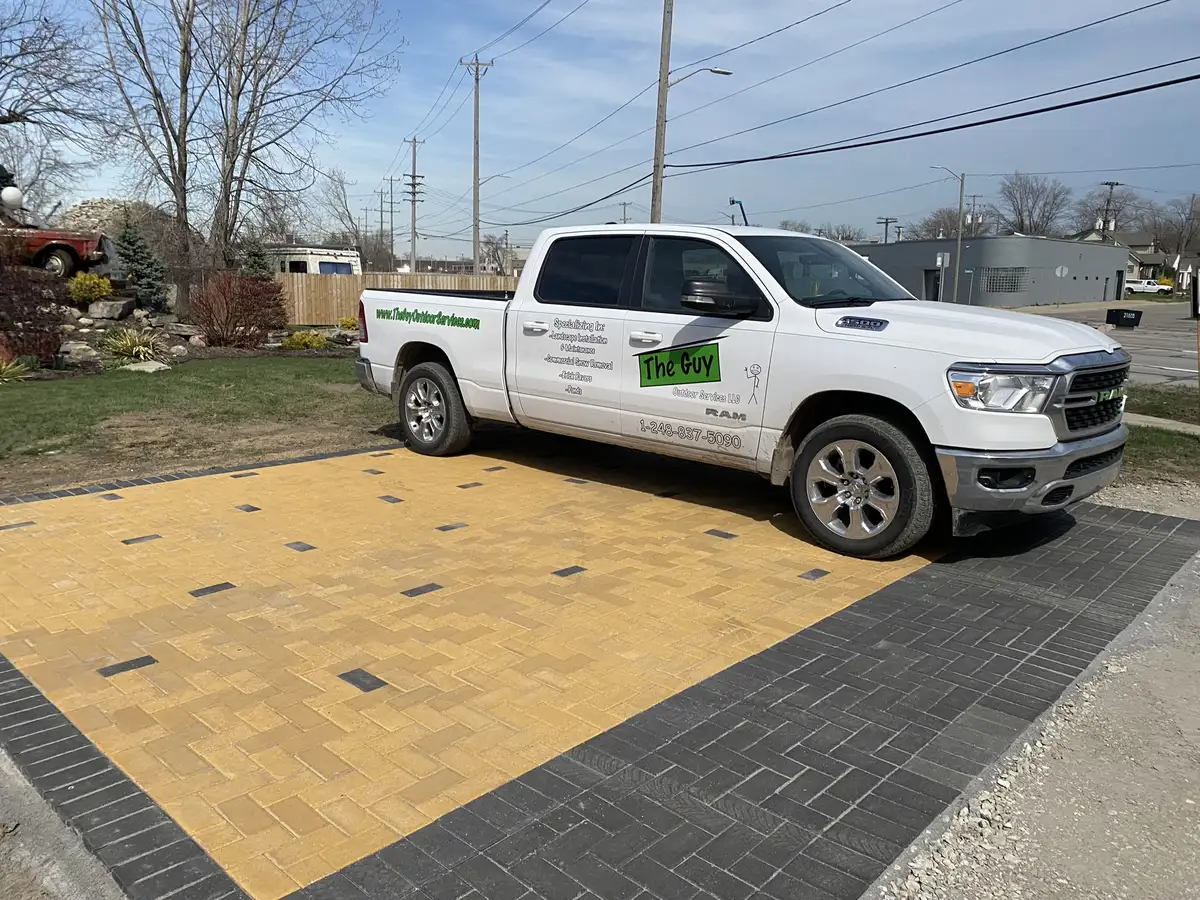
The short answer: choose an exterior-rated paver that works with a site-specific base, drainage plan, and finished grade. Material alone does not determine how well a patio handles Michigan weather. The surface, foundation, edge restraint, joint system, and surrounding landscaping need to work together.
Start with how the patio will be used and how it should connect to the property. Dining furniture, a grill, doors, steps, planting beds, lawn edges, and walking paths all affect the size and layout. Then compare pavers in outdoor light and ask how each option will be installed, maintained, and repaired.
Based in Warren since 2006, The Guy Outdoor Services provides patio installation, hardscaping, drainage, and landscape design-build services across Metro Detroit. Planning those connected services together is useful when a patio must meet lawn grades, planting beds, lighting, walls, or another phase of the yard.
Compare Patio Paver Materials for Michigan Weather
No single material is automatically best for every Michigan patio. The right choice balances freeze-thaw suitability, traction, appearance, maintenance, repairability, and the way the product fits the installation plan for the property.
Concrete pavers
Concrete pavers offer broad choices in color, texture, scale, and laying pattern. Individual units can be lifted when a repair or future utility access is needed, making them a practical option for many patios. Compare the surface texture, edge profile, and color blend in person; a small sample can look different across a full patio field.
Clay brick pavers
Brick brings a traditional look that pairs naturally with many Metro Detroit homes. Confirm that the product is manufactured for exterior paving and local weather exposure rather than assuming any brick can be used on the ground. The smaller unit size also creates more visible joints and makes patterns such as running bond or herringbone part of the design.
Natural stone
Bluestone, flagstone, limestone, and granite each have their own texture, thickness, color variation, and installation requirements. Natural variation is the appeal, but it also means the installer must plan transitions and joint widths carefully. Ask to compare the exact stone type and finish, especially when winter traction is a concern.
Large-format patio slabs
Large-format units create a cleaner, more contemporary surface with fewer joints. They require precise handling and base preparation so edges align and furniture sits evenly. Their scale works best when the patio dimensions, cuts, steps, and borders are coordinated before installation begins.
Choose a Paver System for Michigan Freeze-Thaw Conditions
Michigan weather repeatedly exposes a patio to moisture, freezing temperatures, thawing, snow, and de-icing products. Water that reaches vulnerable areas can expand when it freezes, while repeated thawing can leave a saturated base more prone to movement. A suitable paver needs to be paired with a system that manages those conditions. The product specification should confirm exterior freeze-thaw use, and the selected finish should provide comfortable traction for the way the space will be used.
Site conditions matter just as much. Properties throughout Warren, Sterling Heights, Troy, Rochester Hills, Birmingham, and Bloomfield Hills can have different grades, access limits, downspout locations, and areas of disturbed soil. A patio and landscaping review should identify where water moves now and how the new surface will connect to the house, lawn, planting beds, and walkways.
Plan the Patio Base, Drainage, and Finished Grade
A premium paver cannot make up for a poorly prepared foundation. A professional installation plan should account for excavation, compacted aggregate, bedding material, edge restraint, joint material, and finished pitch. Ask how aggregate will be compacted, how edges will be supported, and how the base depth will be adjusted for the soil, patio use, elevations, paver system, and site access.
Be cautious when a proposal names the surface paver but says little about base preparation, finished elevations, drainage, or edge support. Those details affect how the patio meets doors, steps, lawns, and planting beds and how the completed area handles water.
Water should also be addressed before the patio locks the grade into place. Downspouts, low areas, and runoff from neighboring surfaces may affect the design. When needed, patio work can be coordinated with drainage solutions or a broader landscape design-build plan so the patio connects cleanly to the rest of the yard.
Coordinate Patio Pavers With the Surrounding Landscaping
A patio rarely ends at the paver edge. Lawn grades, planting beds, steps, walkways, privacy screening, and landscape lighting shape how the space looks and works after installation. Planning those transitions with the patio helps avoid awkward slopes, narrow paths, exposed edges, and planting areas that interrupt drainage.
For Warren and Metro Detroit properties, The Guy Outdoor Services can coordinate patio installation with broader landscaping, including planting-bed edges, sod installation, mulch installation, lighting, and adjoining hardscape elements. Discussing the complete outdoor plan before excavation makes it easier to prepare adjoining grades, place lighting sleeves, and leave room for future features without disturbing finished work.
When both the patio and new landscaping are part of the project, plan the sequence before work starts. Excavation, base preparation, drainage, and finished patio elevations usually need to be settled before nearby sod, mulch, and planting are completed. Coordinating access and grades early can reduce disturbance to finished landscape areas.
Grade changes may also call for steps, seat walls, or a retaining wall. Treating those features as part of the patio and landscape plan keeps the walking route, finished elevations, and planting space coordinated rather than solving each edge after the pavers are installed.
Plan Winter Care for Paver Walks and Patios
Winter maintenance should match the selected surface. Ask which snow-removal tools and de-icing products the paver manufacturer recommends, how the joint material should be protected, and whether snow should be stored away from particular edges or drainage paths. Avoid assuming every paver, stone, or joint system can be treated the same way.
Compare Patio Installation Estimates Line by Line
Patio estimates can differ because they do not always include the same work. Compare the specified material, patio dimensions, demolition, excavation, aggregate base, compaction, drainage, borders, cuts, steps, joint material, cleanup, and site-access assumptions. A clear written scope should show what is included and identify choices that could change the final price before work begins.
What to Ask a Warren Patio and Landscaping Contractor
A useful contractor conversation should connect the visible design to the work beneath and around it. Ask how the plan responds to existing grades and drainage, which product specifications apply to the selected paver, how the base and edges will be built, and how lawn or planting areas will be repaired after access. Also ask for a written schedule and payment structure, care guidance, and clear terms for any product or workmanship warranty offered. Compare specific answers and written scopes instead of relying only on a total price.
Check Warren Site and Permit Requirements Before Scheduling
Permit or zoning requirements can depend on the patio's scope, location, grade changes, and related features. Warren property owners can review current applications and instructions through the City of Warren Building Division. Confirm the requirements that apply to the planned work before installation, especially when the project includes steps, walls, utility work, or changes near property boundaries.
Use This Michigan Patio Paver Checklist
- Exterior suitability: Confirm the product is intended for outdoor paving in a freeze-thaw climate.
- Traction: Compare finishes when dry and wet, especially near steps, doors, or shaded areas.
- Style: View samples beside the home's brick, siding, roof, and existing masonry.
- Layout: Plan the field, border, pattern, cuts, steps, and transitions as one composition.
- Daily use: Allow room for furniture, grilling, doors, and comfortable walking paths.
- Maintenance: Ask how joints, stains, seasonal cleaning, and individual repairs will be handled.
- Winter care: Confirm the recommended snow-removal tools and de-icing products for the chosen paver.
- Installation: Review the proposed base, drainage pitch, edge restraint, and site-access plan.
- Landscaping: Confirm how the finished patio will meet lawn, planting beds, walks, steps, and any planned lighting.
If the patio will eventually support a larger outdoor living space or outdoor kitchen, plan those future elements now. Base extensions, utilities, steps, lighting sleeves, and circulation can be easier to coordinate before the first phase is built.
Patio Paver FAQs for Michigan Homeowners
Which patio paver material is best for Michigan weather?
There is no single best material for every property. Concrete and clay pavers, natural stone, and large-format slabs can all be suitable when the specific product is rated for exterior freeze-thaw exposure and its texture, thickness, base, and drainage plan fit the site.
Why do the patio base and drainage matter as much as the paver?
The base supports the patio, while finished pitch and nearby drainage paths influence where water moves. Existing low spots, downspout discharge, water near the foundation, and the proposed elevations should be reviewed before installation so the new patio does not create a drainage problem elsewhere in the landscape.
Can patio installation and landscaping be planned together?
Yes. Planning lawn grades, planting beds, walkways, steps, lighting, drainage, and retaining or seat walls with the patio can create cleaner transitions and reduce disturbance to finished areas. The installation sequence should be set before excavation begins.
What should a patio installation estimate include?
A written estimate should identify patio dimensions, material and pattern, demolition, excavation, aggregate base and compaction, edge restraint, joint material, grading, drainage, steps or walls, landscape repairs, site access, cleanup, and any allowances. Compare the written scope as well as the total price.
Can de-icing products damage patio pavers?
Some de-icing products can affect pavers, joint material, surrounding plants, or nearby metal. Follow the paver manufacturer's care guidance and ask the installer which winter products and snow-removal methods are appropriate for the finished surface.
Do I need a permit for a patio in Warren, Michigan?
Requirements can depend on the patio's scope, location, grade changes, and related features. Review current City of Warren Building Division information and confirm what applies before installation, especially when the work includes steps, walls, utilities, or changes near property boundaries.
What affects the cost of a paver patio in Michigan?
Cost depends on the patio size, paver or stone selection, pattern and borders, demolition, site access, excavation and base requirements, grading and drainage, steps or walls, and added features. Compare written scopes so you can see whether proposals include the same preparation and finish work.
When should I start planning a Michigan paver patio?
Start before you want construction to begin so there is time to compare materials, review drainage and access, coordinate related landscaping, and confirm any applicable requirements. Installation timing depends on workable site and weather conditions, material availability, and the approved scope.
Explore The Guy Outdoor Services’ completed outdoor projects, learn more about landscaping and patio installation, or review service information for Warren. When you are ready to compare materials, layout, and site conditions for your property, request a patio installation estimate or call (248) 837-5090.