
The most useful landscaping conversation starts before anyone chooses plants or decorative stone. Warren homeowners get a clearer plan when they can explain the problem, compare the same scope across estimates, and understand how the work will hold up through rain, summer heat, fall cleanup, and winter conditions.
This guide explains how scope, site conditions, material choices, and future maintenance affect project order. It also shows where estimates need enough detail to keep connected phases coordinated. Learn more about landscaping services and outdoor improvements in Warren.
Before requesting an estimate: take photos after rain, note where lawn or plants repeatedly struggle, list any future patio or lighting plans, and decide how much routine yard care fits your schedule. Those details make an on-site discussion more productive.
What Problem Should the Landscaping Solve?
“Update the yard” can describe very different projects. One property may need overgrown shrubs removed and beds reshaped. Another may need grade corrections, new sod, planting, and a coordinated full-yard layout. Begin with the result: better drainage, easier maintenance, more privacy, healthier lawn, clearer walkways, or a more usable outdoor space.
Then separate immediate needs from later ideas. If a patio, outdoor kitchen, lighting, or irrigation may be added later, mention it now. A landscape design-build plan can help organize connected improvements, while a smaller landscape refresh may only require bed preparation, planting, mulch, or lawn repair. Defining the outcome keeps the proposal focused and prevents unrelated options from obscuring the work that matters most.
How Should Homeowners Compare Landscaping Estimates?
Compare the written scope before comparing the total. A useful proposal identifies work areas, removals, preparation, grading, material types and quantities, plant sizes and counts, cleanup, and any lawn restoration around access routes. It should also make exclusions understandable. Two totals are not comparable when one includes soil preparation and disposal while another does not.
An hourly rate alone does not answer whether a project is priced fairly. Crew size, equipment, access, material handling, disposal, and the amount of preparation all affect how much can be completed in an hour. Ask what finished result the estimate covers, what could change the price, and how changes are approved. That gives you a better basis for comparison than a single labor number.
What Site Conditions Need to Be Reviewed First?
Walk the property with water movement in mind. Low lawn areas, downspouts discharging into beds, soil washing across pavement, standing water, and mulch that moves after storms can influence grading, plant selection, and the order of work. If those conditions are ignored, new material may hide the symptom without solving the cause. Review possible drainage solutions before installing finish materials.
Access matters too. Gates, narrow side yards, overhead branches, utilities, existing pavement, and areas that must remain usable can affect equipment and material delivery. Ask how the work area will be reached, what surfaces need protection, and how disturbed lawn or beds will be restored.
How Are Plants and Materials Chosen?
Plant choices should reflect sunlight, soil moisture, mature size, winter exposure, and the homeowner’s tolerance for pruning and seasonal cleanup. A plant that fits on installation day may crowd a window, walkway, utility, or neighboring plant after several growing seasons. Ask how large each selection is expected to become and whether substitutions will follow the same functional requirements.
The “rule of three” is a common design guideline that uses odd-numbered groupings to create a more natural-looking composition. It can help with repetition and visual rhythm, but it is not a requirement. The site still controls the layout: bed shape, available space, plant spread, views, and maintenance needs matter more than forcing every plant into a group of three.
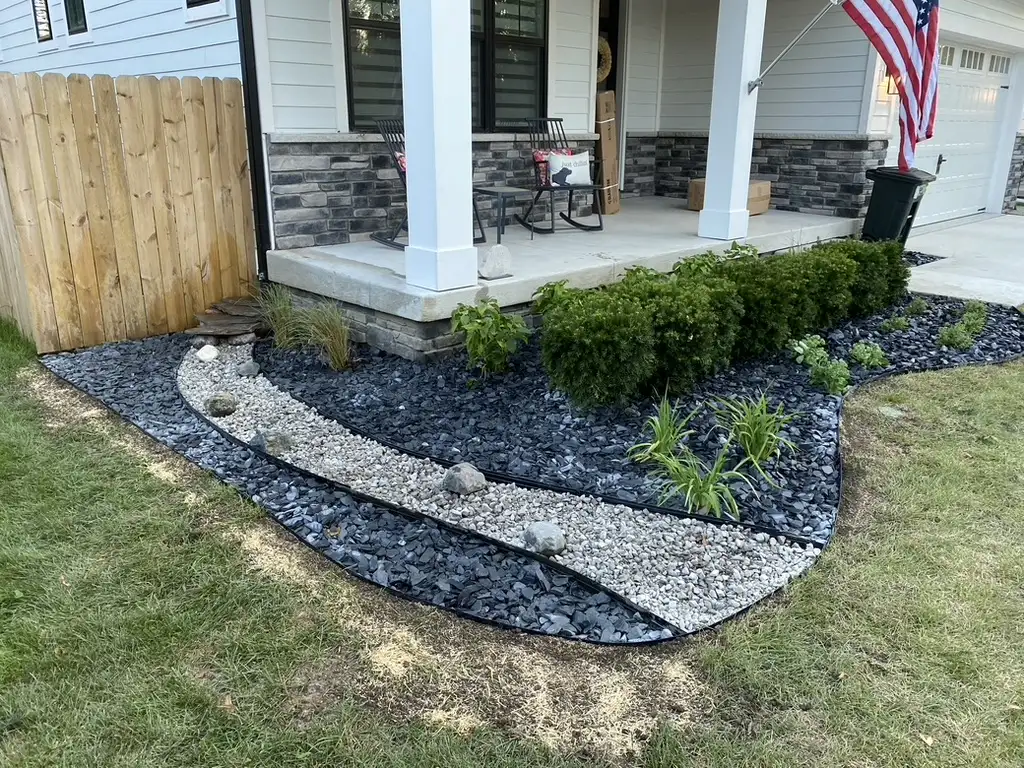
Finish materials deserve the same clarity. Confirm whether the plan calls for mulch, decorative stone, edging, topsoil, seed, or sod installation, and how those materials meet adjoining lawn, walks, and planting beds. Material names without quantities, depths, or defined areas can leave too much room for different interpretations.
What Project Order Helps Prevent Rework?
Work that changes water flow, elevation, utilities, or access generally belongs before planting and finish work. Drainage and grading come before sod. Bed preparation comes before plants and mulch. Conduit for future landscape lighting is easier to plan before completed lawn and beds are in the way.
Before booking, ask for the expected sequence and who coordinates connected tasks. Also ask what happens if hidden conditions are discovered. A clear change process should identify the issue, explain the proposed response, and receive approval before extra work moves forward.
How Much Maintenance Will the Finished Yard Need?
There is no useful one-price answer for landscape maintenance without a defined scope. Property size, visit frequency, mowing, edging, bed care, pruning, seasonal cleanup, and material removal all change the work involved. A recurring proposal should name the tasks and schedule so homeowners understand what is—and is not—included.
New work also has an establishment period. Ask for watering guidance for plants or sod, early weed expectations, pruning needs, mulch care, and signs that should prompt a follow-up. If low maintenance is a priority, say so before the plant list and layout are finalized. Ongoing landscape maintenance should be considered as part of the plan, not after the yard is installed.
A Five-Point Checklist Before You Book
- Define the result: name the problems to solve and the areas included.
- Compare the same scope: review preparation, quantities, cleanup, and exclusions.
- Resolve site constraints: discuss drainage, grading, utilities, access, and future work.
- Confirm the sequence: understand how connected tasks and changes will be handled.
- Plan for care: choose plants and materials that fit the maintenance you want to provide.
Explore landscaping in Warren, MI for local service details, or request an estimate to discuss your property and priorities.
FAQ: Warren Landscaping Before Booking
The rule of three is a design guideline that groups plants or repeated features in odd numbers to create a natural-looking composition. It is not a requirement. Mature plant size, spacing, sunlight, water needs, and the shape of the bed should guide the final layout.
No. An hourly rate does not show crew size, equipment, materials, site preparation, disposal, cleanup, or the amount of work included. Compare written scope, quantities, exclusions, and the finished result each estimate describes.
Common planning mistakes include choosing plants only for their current appearance, covering drainage problems with new materials, doing finish work before grading or utilities, failing to address access and cleanup, and approving a plan without understanding its ongoing maintenance.
Maintenance cost depends on property size, visit frequency, mowing and edging needs, bed care, pruning, seasonal cleanup, material removal, and whether specialized work is included. A useful proposal should state the tasks and schedule rather than provide one unexplained total.
Ask what problem the plan solves, what is included and excluded, how drainage and access affect the work, which materials and plant quantities are specified, what order the work will follow, how changes are approved, and what care the finished landscape will need.