
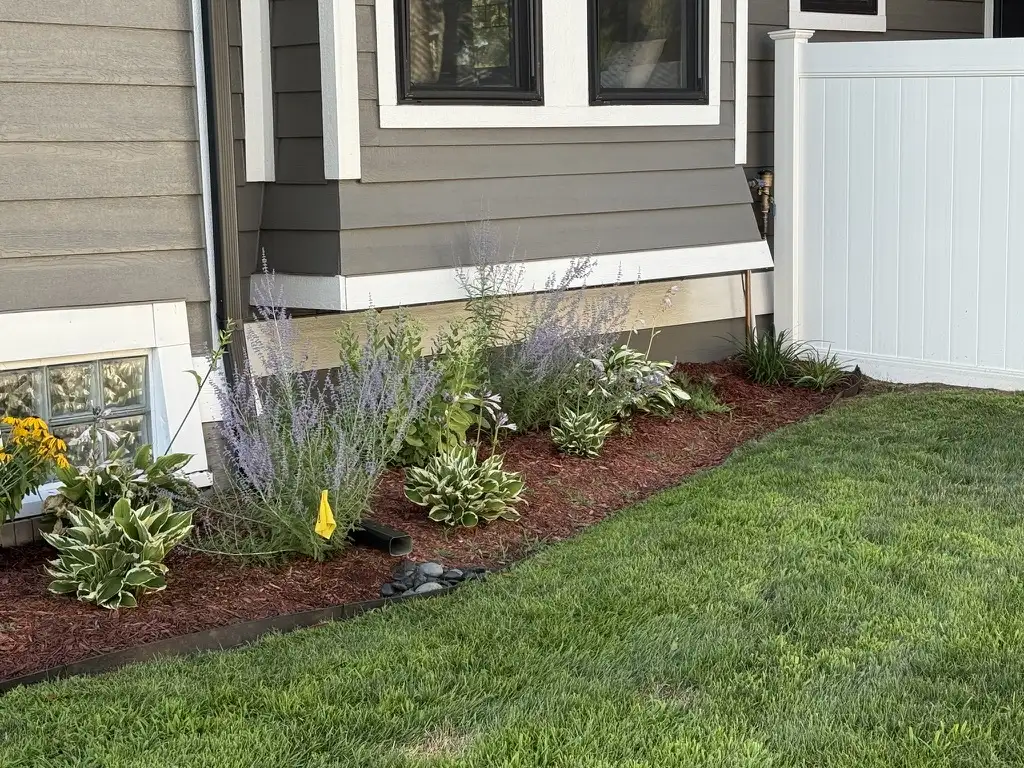
Mulch installation cost cannot be judged by the bag price alone. A professional quote may also include measuring the beds, delivering material, clearing debris, managing weeds, restoring edges, moving mulch through limited access, protecting plants, spreading an even layer, and cleaning walks and drives.
That is why two yards with the same square footage can receive different estimates. One may be ready for a light refresh, while the other needs compacted material removed, bed lines rebuilt, or mulch carried by hand through a narrow side yard.
The short answer: start with cubic yards, not a broad online average. Then compare the material, preparation, access, installation, cleanup, and exclusions included in each written quote.
What Makes Up a Mulch Installation Estimate?
Most estimates are built from several parts. Understanding each one makes it easier to compare proposals without assuming the lowest material price produces the lowest completed cost.
- Mulch quantity: the measured bed area and the depth needed after accounting for material already in place.
- Product choice: the selected mulch type and color, priced in bags or bulk cubic yards.
- Delivery and handling: moving material from the supplier to your property and from the drop point to each bed.
- Bed preparation: debris removal, weed cleanup, edge restoration, and any work needed before fresh material is spread.
- Installation and cleanup: distributing mulch evenly, keeping it clear of plant crowns and trunks, and cleaning adjacent hard surfaces.
An estimate should also say what is not included. Plant removal, major soil correction, drainage work, landscape fabric, decorative stone, or hauling away excessive old material can be separate from a normal mulch refresh.
How to Estimate Mulch Quantity
Measure each bed's approximate length and width, add the areas together, and choose the intended finished depth. For a rough cubic-yard estimate, use this calculation:
Square feet × depth in inches ÷ 324 = cubic yards
For example, 600 square feet at a 2-inch depth is about 3.7 cubic yards before field adjustments. Curved beds can be broken into smaller rectangles or circles for a planning estimate. A contractor should still verify the measurements, existing depth, and conditions before ordering material.
The goal is not to add the same blanket layer every year. If useful mulch remains, the new quantity may only need to restore the intended depth. If old material has formed a compacted layer or built up around plants, preparation may matter more than adding volume.
Bagged Mulch Versus Bulk Mulch
Bagged mulch can be convenient for a small bed because the quantity is easy to transport and stage. Bulk delivery is often more practical when several beds need material, but it requires a suitable drop location and a plan for moving mulch around the yard. The better comparison includes product, delivery, handling, and installation—not only the shelf price or cubic-yard price.
Bag sizes also matter. Thirty 2-cubic-foot bags contain 60 cubic feet, or about 2.22 cubic yards. Thirty 1.5-cubic-foot bags contain 45 cubic feet, or about 1.67 cubic yards. To calculate the material purchase, multiply the current price per bag by 30, then add any tax or delivery charge. Check the label before comparing that total with a bulk quote.
Five Site Conditions That Can Change the Cost
1. Existing mulch depth
A thin, weathered layer may only need loosening and a measured top-up. A deep or compacted layer can require raking, redistribution, or removal before fresh mulch is added. Installing more without checking the bed can bury plant crowns and hold moisture against trunks.
2. Bed edges and weeds
Clean bed lines make the finished work look intentional and help separate mulch from turf. Recutting long or overgrown edges takes more time than spreading material in a prepared bed. Weed and debris cleanup should be defined so both parties know the expected starting condition.
3. Access from the delivery point
A driveway next to open front beds is different from a fenced backyard reached by steps or a narrow gate. Distance, slopes, soft ground, parked vehicles, and protected hardscape can affect how material is moved and which equipment can be used.
4. Plant density and bed shape
Mulch can be spread quickly in a broad open bed. Closely spaced perennials, low branches, irregular borders, and many small pockets require more careful hand work. The estimate should reflect the actual layout instead of relying only on total square footage.
5. Washout or drainage problems
If runoff repeatedly moves mulch onto a walk or driveway, a fresh layer may not solve the underlying problem. Ask whether the edge, grade, downspout routing, or a separate drainage solution should be reviewed before paying to replace washed-out material again.
How to Compare Mulch Installation Quotes
Put the proposals side by side and confirm that they describe the same job. A clear estimate should identify:
- the measured area or cubic-yard quantity;
- the mulch product and color;
- delivery and staging responsibilities;
- bed cleanup, weed handling, and edging;
- whether old mulch is loosened, redistributed, or removed;
- the intended finished depth and clearance around plants;
- access limits and protected surfaces;
- final cleanup; and
- any exclusions or separately priced corrective work.
A single price per cubic yard can be useful only when the inclusions match. One quote may cover material and spreading, while another also includes bed preparation, delivery, edging, and cleanup.
DIY or Professional Installation?
DIY installation can make sense for a small, accessible bed when you can measure, transport, prepare, and spread the material safely. Include delivery or vehicle capacity, wheelbarrow access, tools, disposal, and cleanup in the decision—not just the mulch purchase.
Professional mulch installation is most useful when the property has extensive beds, difficult access, heavy preparation, or several areas that need a consistent finish. It can also make the scope clearer when mulch is coordinated with landscape maintenance, planting, or other yard work.
Planning a Mulch Estimate in Warren and Metro Detroit
Before the site visit, note the beds you want included, the product or color you prefer, where a delivery could be staged, and whether weeds, old material, runoff, pets, gates, or nearby vehicles affect access. Photos and rough measurements can help start the conversation, but the final quantity should be checked on site.
The Guy Outdoor Services provides mulch installation from its Warren home base across the listed Metro Detroit service areas. Homeowners in the Warren service area can use this guide to prepare for a property-specific review. For an estimate based on your beds and access, send your project details through the contact page.
Mulch Installation Cost FAQ
Most professional estimates combine the measured mulch quantity with material, delivery, bed preparation, edging, installation labor, access, and cleanup. Removing excess old material or correcting a bed problem can change the scope, so compare the full written estimate rather than one price per bag or cubic yard.
Measure the bed area in square feet, choose the intended depth in inches, then divide area multiplied by depth by 324 to estimate cubic yards. Irregular beds, existing mulch, settlement, and field measurements can change the final order, so a contractor should verify the quantity before delivery.
Multiply the current price per bag by 30, then include any tax or delivery charge. Check bag size before comparing the total: thirty 2-cubic-foot bags equal about 2.22 cubic yards, while thirty 1.5-cubic-foot bags equal about 1.67 cubic yards.
Inspect the bed instead of adding the same amount automatically each year. Refresh mulch when decomposition, movement, or washout has reduced the useful layer, and add only enough to restore the intended depth. Excessive buildup can hold moisture against plant crowns and tree trunks.
A clear estimate should identify the measured area or quantity, product and color, delivery, bed cleanup, weed or debris removal, edging, handling of existing mulch, installation depth, plant and trunk clearance, access limits, hard-surface cleanup, and any exclusions.