
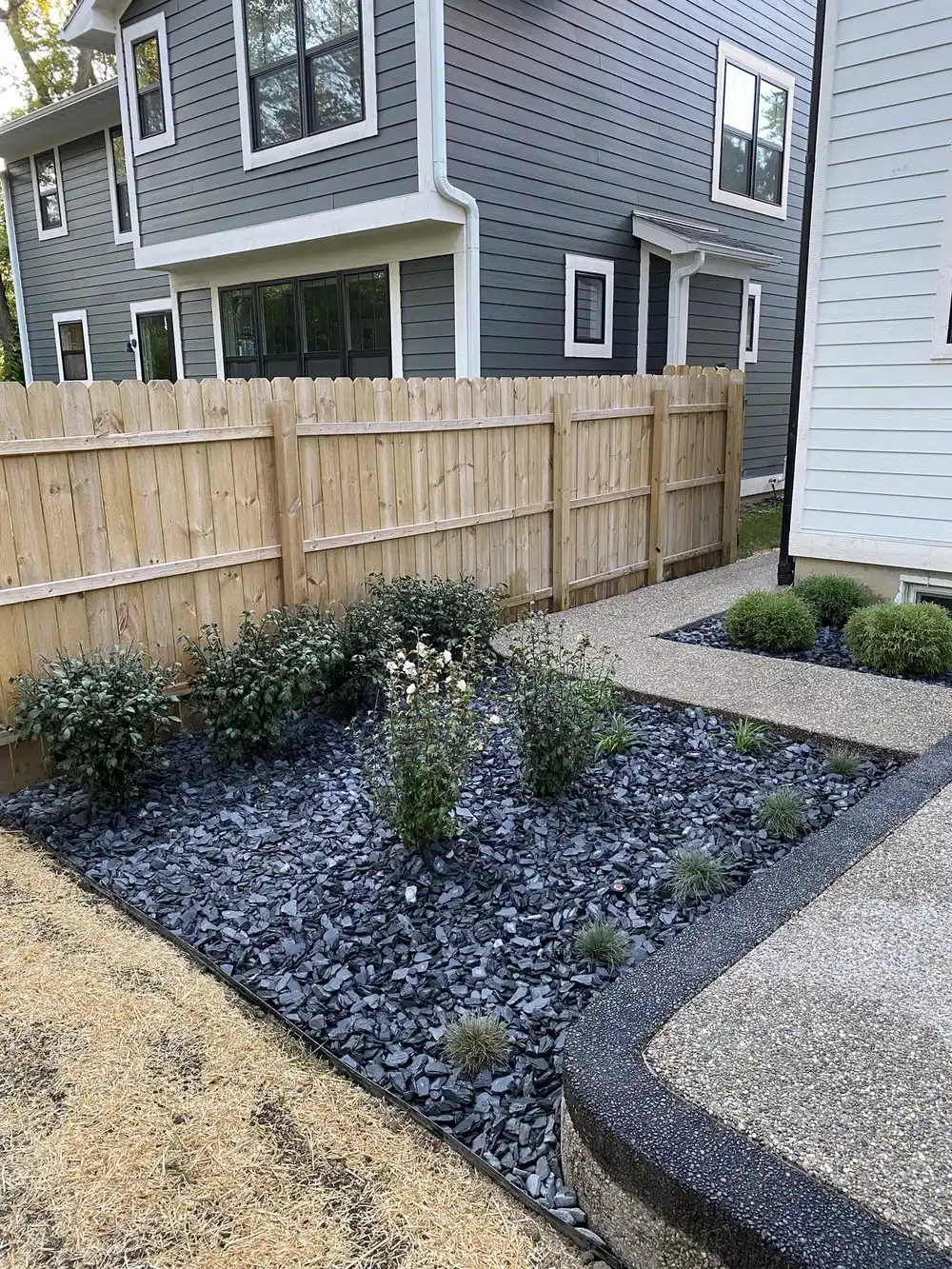
The most useful landscaping questions come before a homeowner chooses plants, pavers, or a date on the calendar. First, the project needs a clear purpose, an honest reading of the property, and a written scope that accounts for what is already there.
That is especially important when planning landscaping in Warren, MI. A yard update may involve planting beds, sod, drainage, grading, hardscape, or recurring care—and those pieces do not all follow the same process. Use these seven questions to turn a broad idea into a project you can evaluate.
Start with the result you need. “Make the front entry easier to maintain,” “stop water from collecting near the patio,” or “replace the worn lawn after construction” is more useful than naming a material before the site has been reviewed.
1. Is This an Installation, a Repair, or Recurring Maintenance?
“Landscaping” covers several kinds of work. A one-time installation can include new beds, plants, mulch, stone, sod, grading, or coordinated improvements across the property. A repair addresses a condition such as erosion, settling, drainage, or damaged lawn. Recurring landscape maintenance keeps established areas managed over time, while lawn care focuses on the turf.
Be specific about whether you want to change the property or care for what is already there. If several needs overlap, ask for each part to be identified separately so the proposal does not treat installation and ongoing service as one vague item.
2. Which Property Conditions Need to Be Inspected First?
A landscaping estimate should begin with the conditions that can change how the work is built. Point out low spots, water that crosses pavement, downspout outlets, thinning turf, exposed roots, steep grade changes, utility equipment, irrigation components, gates, steps, fences, and narrow access.
Water movement deserves attention before finish materials are selected. If standing water, erosion, or repeated turf failure is part of the problem, ask whether drainage and grading work should precede planting, mulch, or new sod. Photos taken during or just after rain can show patterns that disappear by the day of the site visit.
3. Could Permits, Zoning, Utilities, or HOA Rules Affect the Plan?
Not every landscaping task requires an approval, but the answer depends on the work. Planting and routine maintenance are different from projects that include structures, substantial grade changes, drainage impacts, or related construction. The City of Warren Building Division publishes permit, application, and zoning information; current requirements should be confirmed for the actual scope.
Ask who is responsible for checking requirements and completing any application. Before digging, also identify known utilities, private lines, irrigation, and lighting. If a homeowners association applies to the property, check its material, fence, structure, and review rules before final selections are ordered.
4. What Exactly Does the Written Estimate Include?
A useful estimate makes the work visible on paper. It should identify the project area and explain removals, preparation, excavation or grading, plant and material selections, quantities where practical, disposal, cleanup, restoration, and any aftercare that is included. Optional work and exclusions should be easy to find.
These details also explain why two prices may differ. Access, demolition, drainage corrections, equipment needs, material quantities, and restoration can change the work well before the final plant or surface choice. Compare the preparation and responsibilities behind each total, not just the totals themselves.
5. Is the Work Sequenced to Avoid Redoing Finished Areas?
When a project has several parts, the order matters. Drainage and grade decisions usually need to be settled before sod and planting beds. Patio or walkway preparation may affect nearby elevations. Sleeves or conduit for future lighting can be easier to plan before finished surfaces and planting are in place.
If the long-term goal includes several features, a landscape design-build plan can connect them even when installation will happen in phases. For a step-by-step overview, see the right order for a Warren landscaping project.
6. Does the Installation Window Match the Work and the Aftercare?
Late summer is a useful time to discuss fall work and begin planning future phases, but a calendar date alone does not determine whether a project is ready. Weather, soil conditions, plant needs, material availability, site access, and the ability to water after installation can all affect timing.
Tell the estimator about travel, events, irrigation limitations, or other contractors. New sod and plants need establishment care after installation, so the person responsible for watering and monitoring must be available. Ask what conditions could move the schedule and how changes will be communicated.
7. What Will the Finished Landscape Require Through the Year?
Design decisions affect recurring work. Ask about watering, pruning, weeding, mulch or decorative-stone upkeep, lawn care, seasonal cutbacks, leaf cleanup, and how snow storage may affect nearby beds. A lower-maintenance preference should influence plant spacing, bed size, ground-cover choices, and the amount of lawn—not appear as an afterthought.
Homeowners in the Warren service area should evaluate a plan across Michigan seasons. The right choice is not only attractive on installation day; it also fits the time and care the household can provide after the crew leaves.
A Quick Pre-Booking Checklist
- The project goal and priority areas are clearly identified.
- Drainage, grade, access, utilities, and existing features have been discussed.
- Permit, zoning, and HOA responsibilities are clear where relevant.
- The estimate lists preparation, materials, cleanup, restoration, and exclusions.
- Connected improvements are arranged in a practical order.
- The schedule allows for weather, selections, and required aftercare.
- The maintenance plan matches how you want to use the property.
When you are ready to review the property, request a landscaping estimate. Share the areas you want to change, the problems you have noticed, and any timing or maintenance priorities so the conversation can begin with the right scope.
FAQ: Booking Landscaping in Warren, MI
No. Permit or zoning requirements depend on the scope. Planting, mulch, and routine maintenance differ from work involving structures, substantial grade changes, drainage impacts, or related construction. Confirm the current requirements with the City of Warren and clarify who will handle any application before work begins.
Important cost drivers include removals, site access, excavation or grading, drainage needs, material and plant quantities, equipment access, disposal, restoration, and aftercare. Compare the written work behind each total instead of comparing totals alone.
Drainage should be reviewed first when a yard has standing water, erosion, runoff, soggy areas, or repeated turf failure. Installing finish materials before correcting the underlying water or grade issue can create avoidable rework.
Landscaping changes or installs part of the property, such as beds, grading, drainage, sod, mulch, plants, or a coordinated outdoor plan. Lawn care focuses on recurring turf needs such as mowing and seasonal treatments. A property may need both, but each should be clearly identified in the scope.
Be ready to identify the priority areas, the result you want, drainage or maintenance problems, access limits, known utilities or irrigation, future outdoor projects, and any timing constraints. Photos of puddling or runoff during wet weather can also help explain conditions that are not visible on a dry day.